
 Instagram
  LinkedIn
  Twitter
  My Account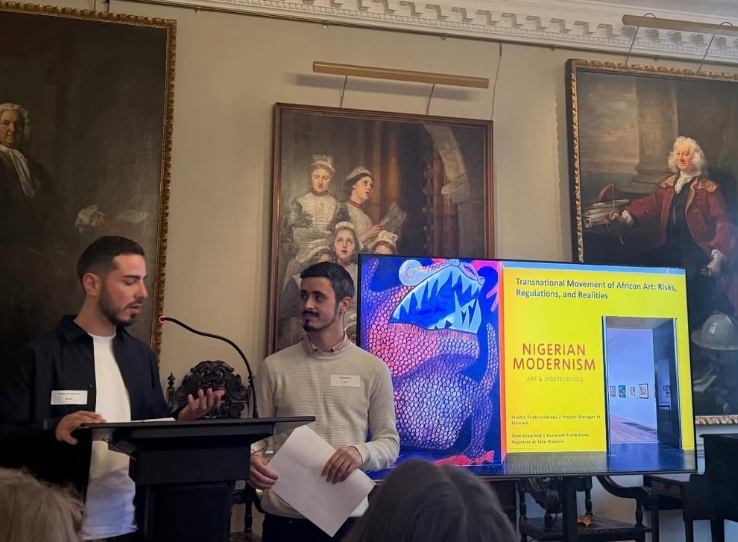
‘Transnational movement of African Art: Risks, Regulations, and Realities’, Stratos Chatzinikolaou, Project Manager, Momart Ltd and Sean Crawford, Assistant Exhibitions Registrar, Tate Modern
I was really looking forward to this presentation. My own experience of managing a partnership project between National Museums of Scotland and Museums of Malawi meant I was aware of some of the challenges of working in Africa.
We had planned to take a Dr David Livingstone exhibition to Museums of Malawi, but it quickly became obvious that due to budget, import restrictions and time constraints we would be unable to use the existing exhibition so instead we focused on remaking the exhibition in Malawi supported by their collections. I was really interested to hear how Tate and Momart had navigated the challenges of moving collections across and out of Nigeria.
Tate could not tell the story of the exhibition, Nigerian Modernism: Art and Independence, about the cultural resistance around Nigerian independence in 1960s without artworks from collections in Nigeria. Although other loans came from the UK, US, Europe and Asia, the loans from Nigeria were key. There were over 250 works in the exhibition, 85% of which were loans, including 55 loans from Nigeria.
Momart mapped out the transport options with their partner in Nigeria, AGS, who they had worked with in the past. They opted for Turkish airlines as the only airline with a connecting route from Lagos to Heathrow. They also had to become familiar with Nigerian exports and customs regulations. The standard 10% export duty would have made the exhibition unaffordable so with negotiation, the National Commission of Museums and Monuments agreed to waiver export duty and settle on a lower fee per artwork.
Most lenders were private individuals without experience of lending artwork so standard loan agreements were questioned, lenders sought legal advice and this made it slower to get agreements finalised. Some lenders insisted on loan agreements being under Nigerian law so Tate’s standard agreement couldn’t be used and this led to further delays, and a need for commercial insurance rather than GIS. To add to the challenges some preferred to communicate on WhatsApp rather than email. Building trust with these new lenders was key.
Once loan agreements were signed, they could move to packing and transport which is when conservators from the Museum of West African Art (MOWAA) who were carrying out condition checks noted several issues with friable materials, active mould and pest infestations. Some works had to be dropped, others treated locally or sealed until they could be treated upon arrival in UK.
Tate maintained a sustainable approach with the policy of no couriers, or if required, virtual couriers. Where one lender wanted a courier, they managed to find a representative in the UK who could act for them to avoid physical travel. However, there was considerable travel in Nigeria for AGS across the country to measure up for crates, condition check and then return to pack and collect the artworks.
The lessons they learned were that flexibility is essential, local partnerships are key, deep cultural understanding matters & weather, (rainy season) roads and geography add risk.
And have a bigger contingency budget!

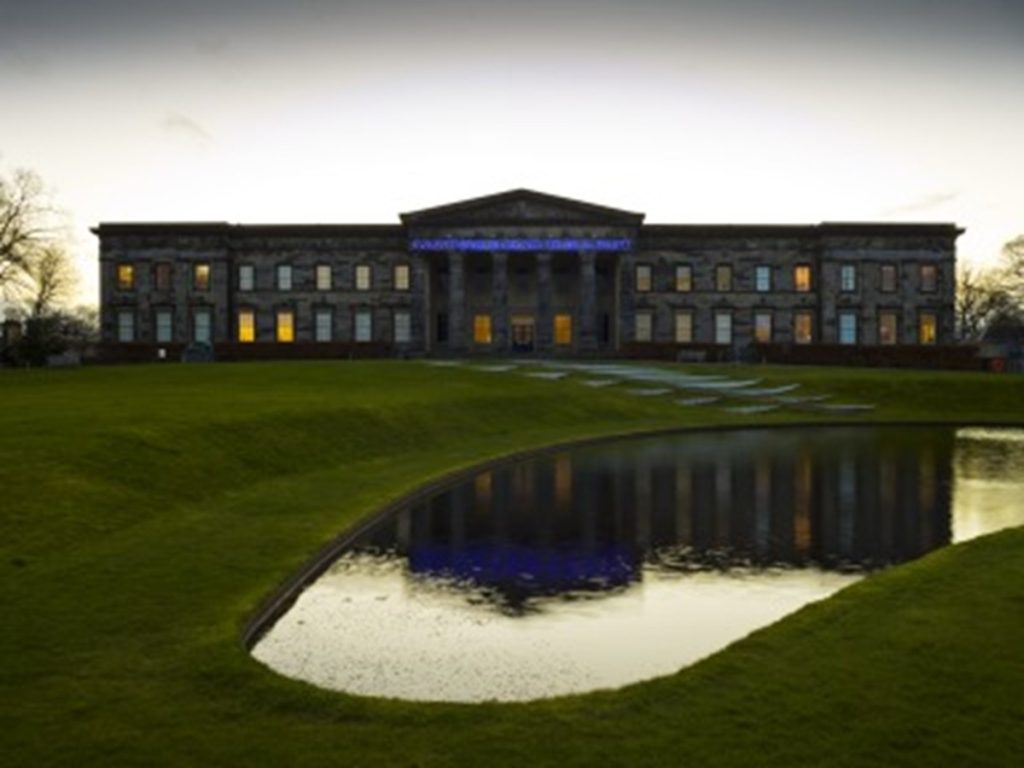
Work no.975 EVERYTHING IS GOING TO BE ALRIGHT
© Martin Creed. All rights reserved. DACS, London